
Vitalik Buterin argues that Ethereum (ETH) should be seen as a store of value
Vitalik Buterin, founder of Ethereum, used his social networks this Sunday (8) to propose a new perspective on ETH: he believes the asset should be seen as a store of value, not just as a token that burns transaction fees. Buterin’s statement comes about four years after The Merge upgrade, which introduced partial coin burning, turning ETH into a potentially deflationary asset and reigniting the debate about its role in the cryptocurrency market.
Buterin’s argument: from “ultrasound money” to stability
In his analysis, Buterin highlighted that the “ultrasound money” narrative — a term popularized to praise Ethereum’s deflationary potential after The Merge — needs to evolve. According to him, the focus should be on the value stability of ETH over time, a fundamental characteristic for an asset to be considered a store of value, just like gold or Bitcoin itself.
Buterin argued that while the fee-burning mechanism helps control ETH issuance, what really matters for institutional and long-term investors is the asset’s predictability and resilience through market cycles. “We want Ethereum to be reliable for storing value over the years, not just because of the expectation of future scarcity,” he said.
The Merge and its impact on Ethereum’s economy
The Merge upgrade, implemented in September 2022, marked Ethereum’s transition from the proof-of-work (PoW) model to proof-of-stake (PoS). In addition to drastically reducing the network’s energy consumption, the event introduced partial burning of transaction fees (EIP-1559), making ETH, at certain times, a deflationary asset.
Since then, more than 3.5 million ETH have been removed from circulation, according to data from the Ethereum Foundation. This new model reinforced the perception of ETH as “hard money” within the crypto universe, but also sparked debates about its true vocation: is Ethereum fuel for DeFi applications, a speculative asset, or a store of value comparable to Bitcoin?
Comparison with Bitcoin and the challenge of trust
Bitcoin has established itself over the years as the main store of value in the crypto market, thanks to its limited supply and predictable monetary policy. Ethereum, on the other hand, has always aimed to be more than just a means of payment, serving as the foundation for smart contracts, NFTs, and decentralized applications.
Buterin believes that, with the network’s maturity and the stability brought by PoS, ETH can occupy a space similar to Bitcoin among long-term investors. However, for this to happen, the market needs to recognize Ethereum’s security, decentralization, and ability to maintain value even in adverse scenarios.
Outlook for investors and ETH’s role in the portfolio
Buterin’s stance may influence the strategy of institutional investors seeking stable assets for portfolio diversification. Historically, ETH has shown higher volatility than BTC, but reduced inflation and the growth of the DeFi ecosystem may help consolidate Ethereum as a store of value over time.
According to recent data, ETH accounts for about 18% of the total crypto market capitalization, second only to Bitcoin. If Buterin’s vision gains traction, we may see a shift in investor profiles and a new appreciation cycle driven less by speculation and more by trust in the asset.
Want to trade crypto with AI support? Check out Zayion AI, Bianchi Capital’s trading assistant.
With information from Livecoins.
Resultados e relatos reais de quem usa o Zayion
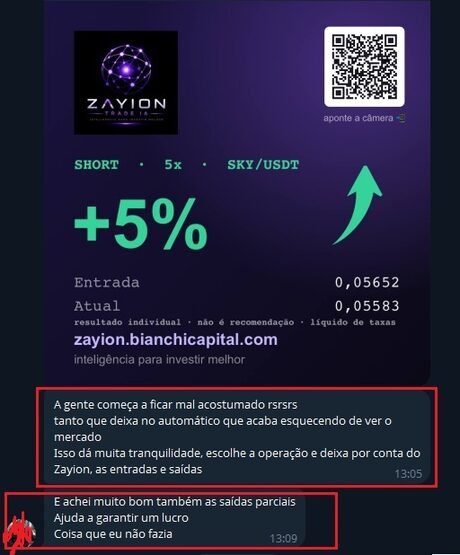
Sinal Zayion: SHORT SKY/USDT +5%
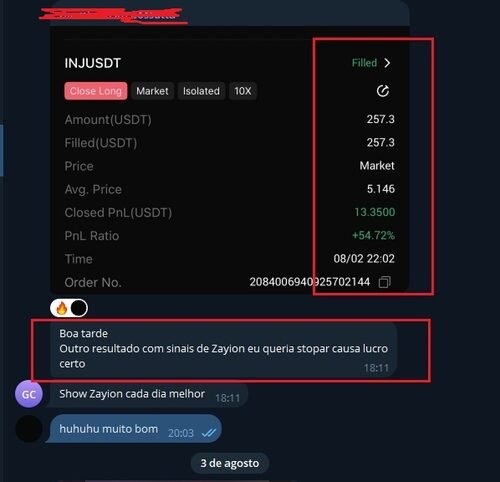
Operação fechada com +54,72% de PnL

Relato de usuário: “teve bons lucros realizados já”
Prints reais enviados por usuários. Resultados individuais e não representam garantia de rentabilidade. Conteúdo educacional, não é recomendação de investimento.
Quem escreve no CoinsFrontier
Alexandre Bianchi
Fundador da Bianchi Capital e do Zayion AI. ~10 anos no mercado de ativos digitais, autor de referência e presença na mídia.

Receba as melhores análises de cripto no seu e-mail
Automação, bots e sinais sem caixa-preta — direto no seu e-mail. Grátis.
Sem spam. Cancele quando quiser.
✅ Pronto! Confira seu e-mail (e a caixa de promoções) para confirmar.