
FalconX warns: Binance hack may change institutional crypto custody
The recent Binance hack has reignited discussions about security in the crypto sector, leading FalconX to state that major institutional investors may start avoiding leaving assets on exchanges from 2027 onward, changing custody practices and impacting how the market operates.
Why does the Binance hack worry institutional investors?
According to Joshua Lim, a FalconX executive, the attack on Binance highlights the risks of keeping cryptocurrencies in exchange custody, prompting institutions to consider safer alternatives and potentially speeding up the adoption of external custody solutions.
The most recent breach at Binance, one of the world’s largest exchanges, has brought longstanding concerns about the vulnerability of centralized platforms back to the forefront. For institutional investors, who move significant volumes, exposure to this type of risk can compromise strategies and force structural changes in how they operate in the crypto asset market.
The concern is that as new regulations and market practices become established, the preference for third-party custody—such as private banks or specialized solutions—will increase, reducing the direct use of exchanges for storing large amounts.
What changes for those investing in cryptocurrencies?
FalconX’s warning indicates that, if the trend is confirmed, institutional investors will seek custody models outside exchanges, which could impact volume, liquidity, and even price dynamics in the global crypto market.
For individual investors, changes in institutional behavior could mean shifts in liquidity profiles and the speed of transactions on major exchanges. The possible migration of reserves to external custodians tends to reduce the balances available on exchanges, which could affect order book depth, especially during periods of high volatility.
Additionally, increased demand for independent custody services could drive the emergence of new financial products and technological solutions, such as multi-signature wallets, loss insurance, and real-time audits.
What are the main risks of keeping crypto on exchanges?
According to industry data, hacker attacks on exchanges have caused billions of dollars in losses since 2014, with high-profile cases like Mt. Gox, Coincheck, and now the recent Binance incident.
Centralized exchanges, because they handle large volumes of digital assets, are frequent targets for cybercriminals. Even with investments in security, vulnerabilities can be exploited, resulting in losses for clients and shaking market confidence. The history of incidents reinforces the need for robust custody solutions and the importance of external audits and operational transparency.
| Exchange | Year of attack | Amount lost (USD) | Source |
|---|---|---|---|
| Mt. Gox | 2014 | ~$450 million | Cointelegraph |
| Coincheck | 2018 | ~$530 million | Cointelegraph |
| Binance | 2026 | undisclosed amount | Cointelegraph |
Significant losses at various exchanges over the years have pressured the sector to seek more sophisticated protection mechanisms, but have also fueled debates about self-regulation and the need for global standards for the crypto segment.
How could a possible custody shift affect the crypto sector?
If FalconX’s prediction comes true, decentralizing institutional custody could transform relationships between major investors and exchanges, influencing trading patterns, fees, and even market regulation.
A mass migration of institutional reserves to external custodians could reduce the power of centralized exchanges, while boosting the growth of specialized custody solutions. This could also open the door for traditional banks and fintech companies to enter the segment more strongly, offering customized services for large clients.
This movement could also accelerate the development of innovative financial products, such as custody insurance and smart contracts for automatic reserve audits, raising the standard of security and transparency demanded by the crypto market.
Want to trade crypto with AI support? Meet Zayion AI, Bianchi Capital’s trading assistant.
With information from Cointelegraph.
Resultados e relatos reais de quem usa o Zayion
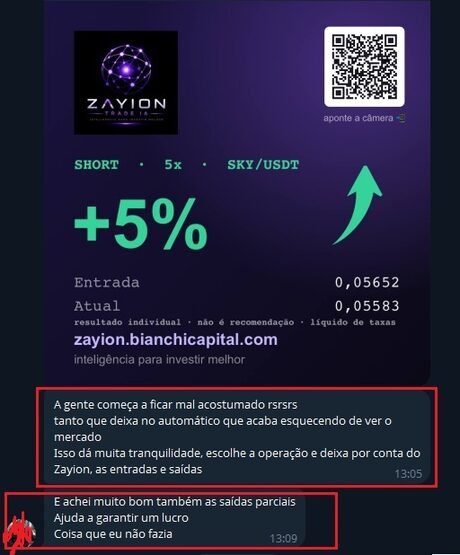
Sinal Zayion: SHORT SKY/USDT +5%
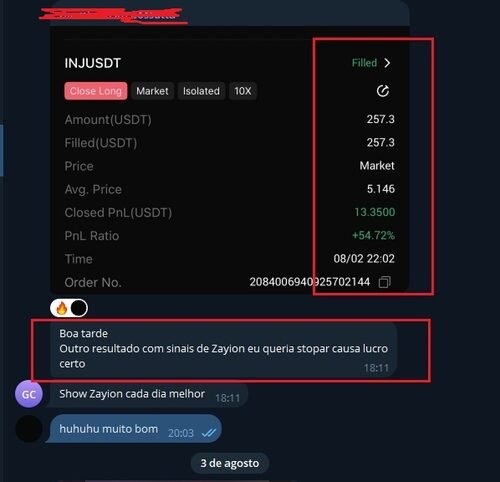
Operação fechada com +54,72% de PnL

Relato de usuário: “teve bons lucros realizados já”
Prints reais enviados por usuários. Resultados individuais e não representam garantia de rentabilidade. Conteúdo educacional, não é recomendação de investimento.
Quem escreve no CoinsFrontier
Alexandre Bianchi
Fundador da Bianchi Capital e do Zayion AI. ~10 anos no mercado de ativos digitais, autor de referência e presença na mídia.

Receba as melhores análises de cripto no seu e-mail
Automação, bots e sinais sem caixa-preta — direto no seu e-mail. Grátis.
Sem spam. Cancele quando quiser.
✅ Pronto! Confira seu e-mail (e a caixa de promoções) para confirmar.