
Fed regulator warns of fraud risks in tokenization after Binance case
Federal Reserve Governor Christopher Waller drew attention on Tuesday (18) to the risks of fraud, compromised keys, and transaction failures within the tokenization of financial assets, citing the recent hacker attack on Binance as an example. The statement reignites concerns about who should be held responsible for losses in tokenized financial environments, a central issue for investors and institutions exploring the integration of traditional finance and blockchain.
What does the Fed’s warning mean for those investing in tokenization?
Christopher Waller’s warning highlights that investors and institutions need to consider fraud risks, technical failures, and legal responsibilities when moving traditional assets onto blockchains, as evidenced by the $137 million hack at Binance, according to Decrypt.
The tokenization movement—meaning the digital representation of real-world assets on blockchains—has gained traction among banks and fintechs, promising greater efficiency and transparency. However, the episode involving Binance, where hackers moved millions in Ethereum weeks after the attack, exposes vulnerabilities that can affect everyone from large institutions to individual investors. For Waller, the central discussion is about who bears the losses in the event of fraud or technical failure: the user, the exchange, or a central authority?
Why does asset tokenization worry regulators?
Regulators like the Federal Reserve fear that migrating financial assets to blockchains increases the risks of fraud, programming errors, and fund loss, especially in environments with little oversight, as Christopher Waller highlighted in a statement published by Cointelegraph.
The advance of tokenization challenges traditional investor protection structures. While banks seek to adopt blockchain technology to speed up settlements and reduce costs, the lack of clear guarantees about token security worries entities like the Fed. The Binance hack is just the latest example of how tokenized systems are still susceptible to sophisticated attacks and illicit transfers. According to Maple Finance executive Sidney Powell, the sector could move up to $15 billion in tokenized assets by 2027, increasing potential exposure to risks.
Who is responsible for losses from blockchain fraud and failures?
Christopher Waller explicitly questioned who should be held responsible for losses caused by fraud, compromised access keys, or failed transactions on tokenized platforms, a topic still undefined in most markets, according to CoinDesk.
In conventional financial systems, central banks and regulated institutions offer some level of user protection. In the crypto and tokenized asset universe, however, responsibility usually falls on the investor, unless there is insurance or some compensation mechanism. The recent Binance case illustrates this dilemma: after the attack, the stolen funds were transferred to various wallets, making recovery difficult. The episode also reignites investigations into other exchanges, such as Mercado Bitcoin, which has also suffered security incidents investigated by Brazilian authorities.
| Incident | Amount Involved | Source |
|---|---|---|
| Binance Hack | $137 million in Ethereum | Decrypt |
| Estimated tokenized assets target (2027) | $15 billion | Maple Finance |
| Mercado Bitcoin Investigation | Undisclosed amount | Bitnoticias |
How might regulation evolve in light of tokenization risks?
The Federal Reserve argues that central banks and regulators should remain at the center of tokenized operations, establishing clear rules on responsibility and security, according to Waller’s official speech reported by CoinDesk.
With growing institutional interest in blockchain, there is also increasing pressure for regulatory frameworks that define who is liable for losses and how to mitigate systemic risks. In Brazil, the debate on security and responsibility in crypto platforms has advanced, especially after cases like Mercado Bitcoin. Internationally, new guidelines are expected to emerge to protect investors and enable the safe expansion of tokenization.
Want to trade crypto with AI support? Check out Zayion AI, Bianchi Capital’s trading assistant.
With information from Cointelegraph, Decrypt, CoinDesk, and Bitnoticias.
Resultados e relatos reais de quem usa o Zayion
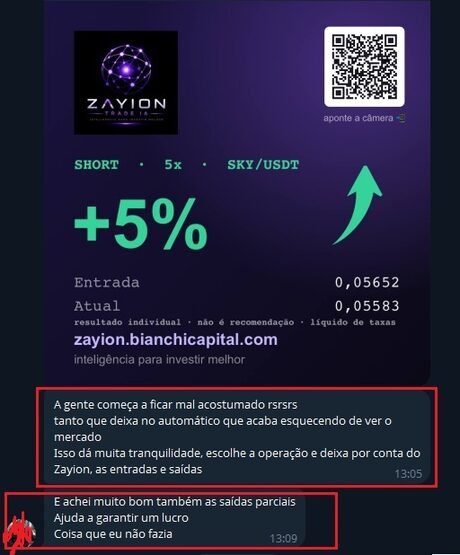
Sinal Zayion: SHORT SKY/USDT +5%
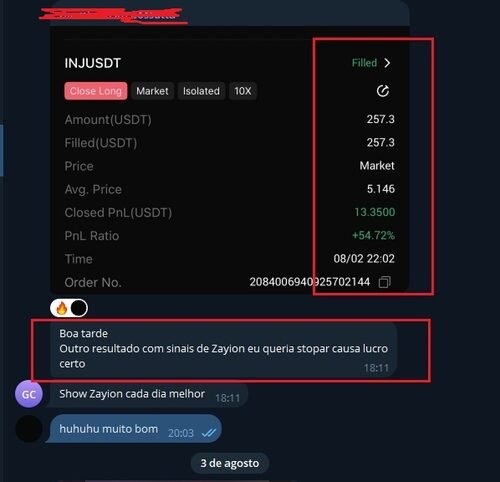
Operação fechada com +54,72% de PnL

Relato de usuário: “teve bons lucros realizados já”
Prints reais enviados por usuários. Resultados individuais e não representam garantia de rentabilidade. Conteúdo educacional, não é recomendação de investimento.
Quem escreve no CoinsFrontier
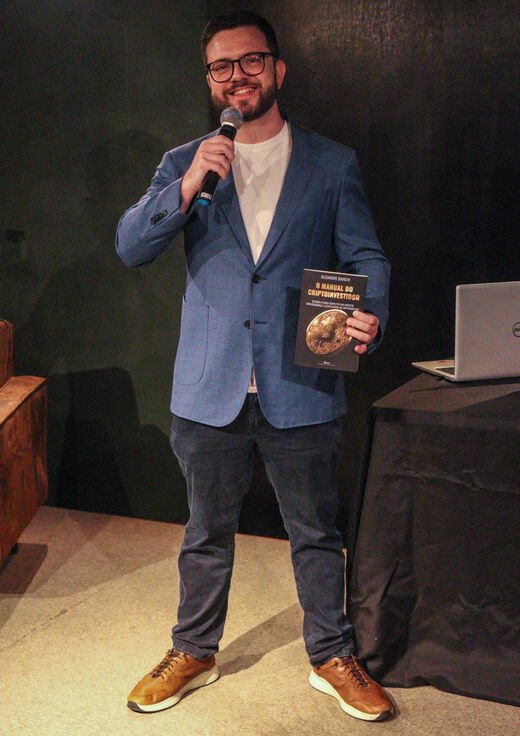
Alexandre Bianchi
Fundador da Bianchi Capital e do Zayion AI. ~10 anos no mercado de ativos digitais, autor de referência e presença na mídia.
Receba as melhores análises de cripto no seu e-mail
Automação, bots e sinais sem caixa-preta — direto no seu e-mail. Grátis.
Sem spam. Cancele quando quiser.
✅ Pronto! Confira seu e-mail (e a caixa de promoções) para confirmar.