
Liquidity error causes Bitcoin to trade at $17,000 on Kraken and clients report losses
The Kraken exchange confirmed this week that it will not reverse trades executed during an anomaly in its Bitcoin pairs with the Canadian dollar, when the cryptocurrency was sold for around $17,000—a 71% discount compared to the global price, which was above $55,000. The decision outraged clients who lost money during the episode.
What happened to Bitcoin’s price on Kraken?
During a period of instability, Bitcoin’s price dropped to $16,900 on Kraken, specifically in the pair with the Canadian dollar (CAD), even while the global value of the coin remained above $55,000, according to the exchange itself and market data.
The so-called “flash crash” happened when sell orders were executed far below market price, causing losses for those holding the asset and unexpected profits for some buyers. Kraken stated there was no evidence of external hacking, raising suspicions about a possible lack of liquidity or operational error. Affected investors claim the failure could have been avoided with protection mechanisms such as price fluctuation limits.
Why did Kraken decide to keep the trades despite the error?
Kraken officially announced it will uphold all trades made during the distortion, claiming that the trades were executed according to the order book rules and that there is no evidence of manipulation or attack, according to a statement released to the press.
By choosing not to reverse the trades, the exchange follows a common market practice, but leaves clients dissatisfied, especially those whose stop or limit orders were triggered at much lower than actual prices. The decision highlights the importance of clear policies on incidents and may impact user trust, especially in lower liquidity pairs like CAD/BTC.
How does this affect those investing in Bitcoin through exchanges?
Events like this expose investors to risks beyond Bitcoin’s natural volatility, as liquidity failures or operational errors can cause unexpected losses even on platforms considered safe, warns the Bitnoticias portal.
For those trading cryptocurrencies, the episode serves as a reminder of the importance of analyzing the liquidity of traded pairs and considering the use of price fluctuation limits and protected orders. Exchanges with lower volume in certain pairs can be more susceptible to “flash crashes,” especially during low trading hours. The case also reignites debates about the need for automatic protection mechanisms to prevent extreme distortions.
What were the numbers of the flash crash on Kraken?
According to data compiled by Livecoins and Cointelegraph, Bitcoin recorded the following prices during the event:
| Pair | Lowest price recorded | Global price at the time | Source |
|---|---|---|---|
| BTC/CAD | $16,900 | $55,000 | Bitnoticias |
| BTC/USD | No significant change | $55,000 | Cointelegraph |
The 71% discount in the BTC/CAD pair is considered one of the largest of the year on major exchanges. Despite the localized impact, the global price of Bitcoin was not affected, highlighting the fragmentation of liquidity across different markets and currencies.
What to expect from the market after the incident?
Experts point out that incidents like this may increase pressure for more transparency and protection mechanisms on centralized exchanges. Kraken, one of the largest in the world, had already faced questions in other episodes of high volatility. Investors should be extra cautious in less liquid pairs and consider the risks of automatic orders on global platforms.
Want to trade crypto with AI support? Meet Zayion AI, Bianchi Capital’s trading assistant.
With information from Bitnoticias, Cointelegraph, and Livecoins.
Resultados e relatos reais de quem usa o Zayion
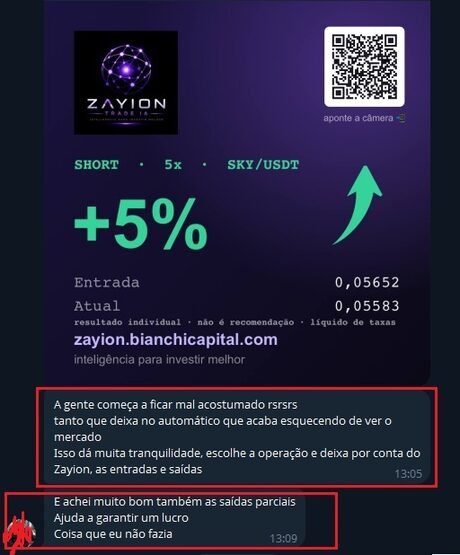
Sinal Zayion: SHORT SKY/USDT +5%
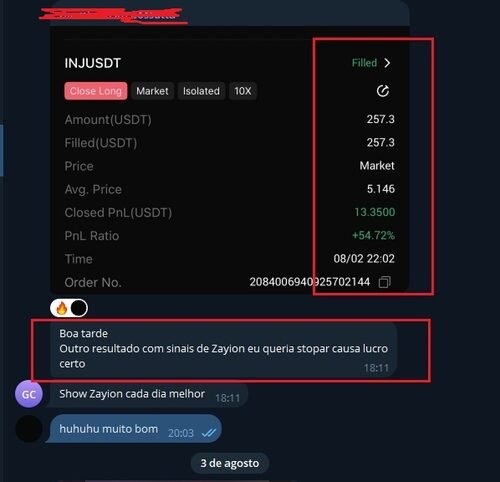
Operação fechada com +54,72% de PnL

Relato de usuário: “teve bons lucros realizados já”
Prints reais enviados por usuários. Resultados individuais e não representam garantia de rentabilidade. Conteúdo educacional, não é recomendação de investimento.
Quem escreve no CoinsFrontier
Alexandre Bianchi
Fundador da Bianchi Capital e do Zayion AI. ~10 anos no mercado de ativos digitais, autor de referência e presença na mídia.

Receba as melhores análises de cripto no seu e-mail
Automação, bots e sinais sem caixa-preta — direto no seu e-mail. Grátis.
Sem spam. Cancele quando quiser.
✅ Pronto! Confira seu e-mail (e a caixa de promoções) para confirmar.